






HANDLING & CARE
Glass care
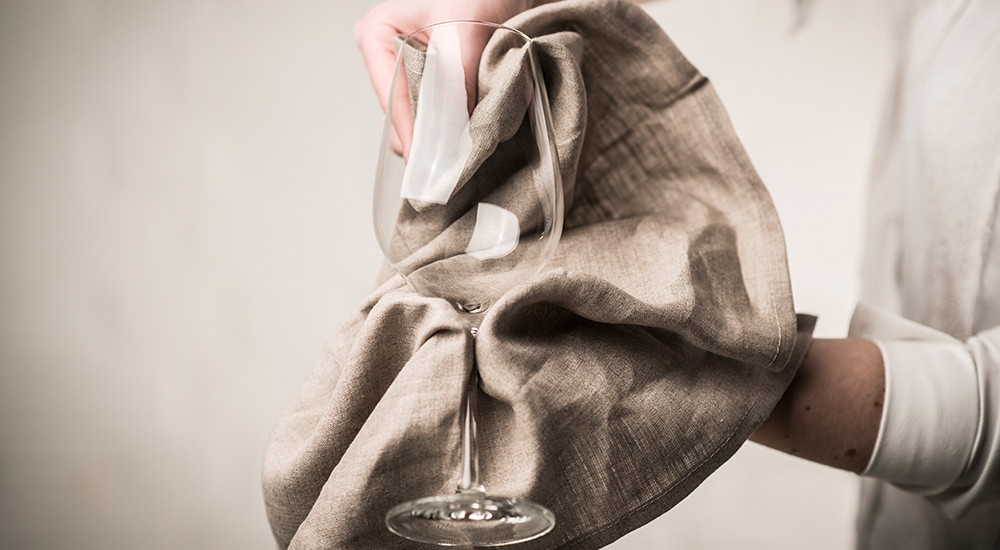
WHAT YOU SHOULD KNOW
More brilliance for your glasses through perfect cleaning.
- Set the rinsing temperature between 50°C and 55°C.
- A maximum temperature of 65°C must not be exceeded. Do not set the rinse temperature below 50°C either.
- Use short rinse programmes. Longer programmes lasting several hours are not recommended.
- Check filter inserts, nozzles and spray arms for cleanliness.
- Keep all food residue out of the dishwasher.
- Use a larger detergent dose for dried-up food residue. Apply softening, partial or full desalination agents depending on water quality.
- Open the dishwasher promptly after the rinse cycle to allow steam to escape.
- Use dish towels made of lint-free material. Pure linen or microfiber are best.
- Never use your polishing cloth for other purposes to avoid odour and grease residue.
- Launder dish towels without adding starch and fabric softener as a general rule.
- Try our company’s special polishing cloths for perfect cleaning – we will be pleased to provide further information.
- Avoid leaving fingerprints when taking glasses out of the dishwasher.
- Lift glasses by their stem or foot when removing them.
- Polish the bowl and foot of thin-walled and handmade glasses separately to avoid breakage.
- Never hold the glass by the base plate when cleaning the bowl. The pressure may lead to breaking the stem.
- Hands must be absolutely clean. Keep paper towels near the dishwasher to encourage hand washing and drying.
- Never breathe on glasses or spray them with cleaning agents. Lightly moisten them with water vapour instead.
- Visually inspect your polishing results by carefully holding the glass up to light.
- The brilliant clarity of crystal glasses brings out the best of a wine‘s colour.
- According to DIN 10511: Food hygiene - Commercial glass washing with glass washing machines.
- Only wash glasses that are labelled as "dishwasher-safe" or "dishwasher-suitable" in a commercial glasswasher.
- Special glasswashing machine with circulated detergent solution as well as fresh water rinse and rinse aid solution recommended.
- Temperature in the cleaning tank must be at least 55°C for hygienic reasons.
- As the durability and usability of a drinking glass is influenced considerably by the temperature, the temperature of the detergent solution should not significantly exceed 60 °C. The temperature of the rinse aid solution should be 65 °C ± 2 °C. Glasses are very sensitive to temperature. Temperature jumps can shorten the life of glasses.
- 90 seconds cleaning time recommended for a brilliant and hygienic rinsing result.
- Depending on the water quality, softening, partial or full demineralisation is recommended.
- Use of plastic baskets or sheathed wire baskets recommended for secure holding of glasses. Baskets with appropriate compartment division and height to match our glasses are available.
- Improper placement of the glasses in the glass baskets or contact between glasses can cause scratches.
- Open the dishwasher immediately after washing. Do not leave glasses in the dishwasher overnight.
- Do not dry or polish washed glasses manually so as not to jeopardise the (hygienic) cleaning result by reintroducing germs and to avoid glass breakage and the risk of injury.
- Keep the drying time of the residues as short as possible to limit the multiplication of germs and to facilitate cleaning.
- Avoid placing drinking glasses on top of each other in the cupboard, as this can lead to scratches and glass breakage, especially at the top rim.
- Allow your glasses to cool to room temperature before pouring cold beverages.
- The glasses are suitable for drinking cold beverages (alcoholic and non-acidic liquids) with a recommended minimum and maximum temperature of 8 - 25°C (46 - 77°F). Based on standards, we regularly conduct tests regarding temperature change resistance with a temperature difference of 50°C (122°F). However, please note that glasses are very sensitive to temperature and sudden temperature changes can shorten the lifespan of glasses. Therefore, be sure to let your glasses cool to room temperature before filling them with cold drinks.
- The glasses are not suitable for hot drinks and not for use in the oven, stove, or microwave.
- Glass is subject to a regular aging process. Excessive mechanical or thermal stress or temperature differences can lead to breakage. To prevent this and scratches, avoid direct contact with ceramic objects, metal, or other glass objects.
- The glasses are not suitable for young children (up to and including 3 years old), and we also recommend that children use the glasses only under supervision.
- Due to the risk of injury and swallowing, the glasses are exclusively for drinking and are not suitable for biting, cleaning with teeth, or inserting into body openings, etc.
- Glass items designated as decorative objects (vases, tealight holders, etc.) are exclusively for decoration and not suitable for use with food or as vessels for drinks.
Safety instructions and general instructions for use
Here you will find relevant information in the context of the GPSR.
Safety instructions and general guidelines for the use of machine-made and handcrafted drinking glasses (stemware and tumblers)
These instructions are intended for adults who use drinking glasses for domestic purposes.
Safety instructions: Rinse the items before (first) use.
General guidelines: The drinking glasses are suitable for drinking hot and cold beverages (alcoholic and non-alcoholic, non-acidic). The recommended minimum and maximum temperature is between 8° and 25°C. Glasses are very sensitive to temperature and sudden temperature changes can shorten the lifespan of glasses. Always allow glasses to cool to room temperature before filling with cold drinks. The drinking glasses are not suitable for hot drinks and not for use in the oven, on the stove or in the microwave. Glass is fragile. Handle the drinking glasses with care to avoid breakage, cracks or chips. Glass is subject to a regular ageing process. Excessive mechanical or thermal stress or temperature differences can cause tension and breakage. To prevent this or scratches, avoid direct contact with ceramic objects, metal or other glass objects. The glasses are not suitable for small children (up to and including 3 years of age). Keep out of reach of children. We recommend that children only use the glasses under supervision. Due to the risk of injury and choking, the glasses are exclusively suitable for drinking and not for playing, biting or inserting into orifices, etc. Glass items advertised as decorative objects (vases, tea lights, etc.) are intended solely for decoration and are not suitable for use with food or as containers for drinks. If the glass is damaged (cracks, chips, splinters), it must no longer be used. Do not use glasses in conjunction with metal cutlery (for example, to scoop up food that has been filled into them).
Cleaning and care: The drinking glasses are dishwasher safe. However, please note the following instructions. When placing the glasses in the dishwasher, make sure that there is enough space between them so that they do not touch each other or other objects. If possible, place the glasses in the upper dishwasher basket so that they do not come into contact with the dishwasher arm. Set the washing temperature between 50°C and 55°C. A maximum temperature of 65°C must not be exceeded. For reasons of hygiene, the washing temperature must not fall below 50°C either. Use short wash programmes. Longer programmes lasting several hours are not recommended. Incorrect loading of the glasses in the dishwasher baskets or glasses touching each other can cause scratches. Keep sieves, nozzles and washing arms clean. Food scraps do not belong in the dishwasher. Dried-on food scraps require a higher detergent dosage. Depending on the water quality, softening, partial or full demineralisation is recommended. After the wash cycle, open the machine immediately so that the steam can escape. Make sure that no fingerprints remain on the glass when removing it from the machine. When removing glasses, hold them by the stem or base plate. In particular, thin-walled, hand-blown glasses should be polished separately according to glass goblet and foot. This avoids breakage. Never hold the glass by the base plate and polish the goblet. The pressure can cause the stem to break. Hands must be absolutely clean. Paper towels within reach near the dishwasher encourage hand washing and drying. To avoid scratches on the glass surface, do not use any abrasive cleaning agents, scouring sponges or sharp objects for cleaning. Use dish towels made of lint-free material. Optimal: pure linen or microfibre. Do not misuse the polishing cloth to exclude odours and grease residues. Tea towels should generally be washed without the addition of starch or fabric softener.
Storage: Store the glasses in a safe place where they cannot fall over or be damaged. Do not stack glasses. Store glasses in a dry place with a constant temperature. Do not place jars on their rim, but store them with the opening facing upwards to allow air to circulate. If odours have developed, swing the jar two to three times in your hand with the opening facing downwards (‘shake out’). Do not leave filled glasses in the sun for longer periods of time. Water dries up and can leave unsightly limescale marks on the inside of the glass surface. Keep enough distance between the items to avoid scratches and thus cracks or breakage.
Disposal:
Dispose of the drinking glasses according to local regulations.
Manufacturer information: Zwiesel® Zwiesel Fortessa AG Dr.-Schott-Str. 35 94227 Zwiesel +49 9922 98210 [email protected]
Safety and general usage instructions for double-walled glasses
These instructions are for adults using double-walled glasses for domestic purposes.
Safety instructions: Rinse item before (first) use.
General usage instructions: The glasses are made of borosilicate glass, which, thanks to its double-walled construction, insulates the temperature of hot and cold drinks and prevents condensation. Borosilicate glass is heat and cold resistant and withstands sudden temperature changes better than conventional glass. The glasses are suitable for hot and cold drinks. Recommended temperature range: -20°C to 150°C. Avoid sudden heating and cooling of the glasses. The silicone vent hole ensures constant air pressure equalisation between the interior of the glass and the environment, thus significantly supporting product stability Temperatures when washing and when using the glasses in the microwave, etc. must not exceed 70°C. Glass is fragile. Handle the drinking glasses with care to avoid breakage, cracks or splinters. Avoid sudden heating and cooling of the glasses. Avoid direct contact with ceramic objects, metal or other glass objects. The glasses are not suitable for small children (up to and including 3 years of age). Keep out of reach of children. We recommend that children only use the glasses under supervision. Due to the risk of injury and choking, the glasses are only suitable for drinking and not for playing, biting or inserting into orifices, etc. Glass items advertised as decorative objects (vases, tea lights, etc.) are only suitable for decoration and not for use with food or as containers for drinks. If the glass is damaged (cracks, chips, splinters), it must no longer be used. Be careful with hot drinks: the contents may be hotter than the outside of the glass. The products are not recommended for preparing food in the oven or on the stove. Do not use glasses in conjunction with metal cutlery (for example, to spoon out the contents).
Cleaning and care: The drinking glasses are dishwasher safe. However, please note the following instructions. When placing the glasses in the dishwasher, make sure that there is enough space between them so that they do not touch each other or other objects. If possible, place the glasses in the upper dishwasher basket so that they do not come into contact with the dishwasher arm. Set the washing temperature between 50°C and 55°C. A maximum temperature of 65°C must not be exceeded. For reasons of hygiene, the temperature should not fall below 50°C. Use short wash programmes. Longer programmes lasting several hours are not recommended. Incorrect loading of the glasses in the dishwasher baskets or glasses touching each other can cause scratches. Keep sieves, nozzles and wash arms clean. Food scraps do not belong in the dishwasher. Dried-on food scraps require a higher detergent dosage. Depending on the water quality, softening, partial or full demineralisation is recommended. After the rinse cycle, open the machine immediately so that the steam can escape. Make sure that no fingerprints remain on the glass when removing it from the machine. Hands must be perfectly clean. Paper towels within reach near the dishwasher encourage washing and drying by hand. To avoid scratches on the glass surface, do not use any abrasive cleaning agents, scouring sponges or sharp objects for cleaning. Use dish towels made of lint-free material. Optimal: pure linen or microfibre. Do not misuse the polishing cloth to exclude odours and grease residues. Tea towels should generally be washed without the addition of starch or fabric softener.
Storage: Store the glasses in a safe place where they cannot fall over or be damaged. Do not stack glasses. Store glasses in a dry place with a constant temperature. Do not place jars on their rim, but store them with the opening facing upwards to allow air to circulate. If odours have developed, swing the jar two to three times in your hand with the opening facing downwards (‘shake out’). Do not leave filled glasses in the sun for longer periods of time. Water dries up and can leave unsightly limescale marks on the inside of the glass surface. Keep enough distance between the items to avoid scratches and thus cracks or breakage.
Disposal: Dispose of the drinking glasses according to local regulations.
Safety instructions and general instructions for use for decanters and carafes as well as glass mixing jugs
These instructions for use are intended for adults who use decanters, carafes or glass mixing jugs for domestic use.
Safety instructions: Rinse the item before (first) use.
General instructions for use: Decanters, carafes and mixing jugs are suitable for decanting, arranging and serving drinks (e.g. wine, water or juice or cocktails). The recommended minimum and maximum temperature is between 8° and 25°C. Decanters, carafes and mixing jugs are very sensitive to temperature and sudden temperature changes can shorten the lifespan of the glass. Always allow glass to cool to room temperature before pouring cold drinks into it. The decanters and carafes are not suitable for hot drinks and not for use in the oven, on the stove or in the microwave. Glass is fragile. Handle the decanters, carafes and mixing jugs with care to avoid breakage, cracks or splintering. Glass is subject to a regular ageing process. Excessive mechanical or thermal stress or temperature differences can cause tension and breakage. To prevent this or scratches, avoid direct contact with ceramic objects, metal or other glass objects. The items are not suitable for small children (up to and including 3 years of age). Keep out of reach of children. We recommend that children only use the items under supervision. Due to the risk of injury and choking, the items are only suitable for decanting, storing and serving drinks and are not suitable for playing, biting or inserting into orifices, etc. Glass items advertised as decorative objects (vases, tea lights, etc.) are only suitable for decoration and not for use with food or as containers for drinks. If the glass is damaged (cracks, chips, splinters), it must no longer be used.
Reinigung und Pflege: Dekanter, Karaffen oder Mixkrüge sollten von Hand mit warmem Wasser und einem milden Reinigungsmittel gereinigt werden. Spülen Sie sie gründlich aus, um Rückstände von Getränken und Reinigungsmitteln zu entfernen. Verwenden Sie weiche Bürsten oder spezielle Reinigungswerkzeuge für Dekanter, um die Innenwände schonend zu reinigen.
Lagerung: Lagern Sie die Artikel sicher an einem Ort, an dem sie nicht herunterfallen oder beschädigt werden können. Artikel nicht stapeln. Lagern Sie die Artikel an einem trockenen Ort mit konstanter Temperatur. Artikel nicht auf den Mundrand stellen, sondern mit der Öffnung nach oben lagern, um Luftzirkulation zu gewährleisten. Sollten sich Gerüche gebildet haben, Produkt zwei bis drei Mal mit der Öffnung nach unten in der Hand schwenken („ausschütteln“). Gefüllte Artikel nicht länger in der Sonne stehen lassen. Wasser trocknet ein und kann unschöne Kalkspuren innen auf der Glasoberfläche hinterlassen. Zwischen den Artikeln genügend Abstand bewahren, um Kratzer und damit Risse oder Bruch zu vermeiden.
Cleaning and care: Decanters, carafes or mixing jugs should be cleaned by hand with warm water and a mild detergent. Rinse them thoroughly to remove any residues of drinks and cleaning agents. Use soft brushes or special decanter cleaning tools to gently clean the inside walls.
Storage: Store items in a safe place where they cannot fall over or be damaged. Do not stack items. Store items in a dry place with a constant temperature. Do not place items on the rim of the mouth, but store them with the opening facing upwards to ensure air circulation. If odours have formed, swing the product two to three times in your hand with the opening facing downwards (‘shake out’). Do not leave filled items in the sun for longer periods of time. Water dries up and can leave unsightly limescale marks on the inside of the glass surface. Leave enough space between the items to avoid scratches and thus cracks or breakage.
Disposal: Dispose of the items in accordance with local regulations.
Manufacturer information: Zwiesel® Zwiesel Fortessa AG Dr.-Schott-Str. 35 94227 Zwiesel +49 9922 98210 [email protected]
Safety and general instructions for use of straws
Safety and general instructions for using champagne coolers